

The primary focus of our clinical studies is to elucidate the natural course and prognosis of spinal diseases, to clarify outcomes of surgical and non-surgical treatments, and to develop new therapeutic devices and strategies. We then performed a prospective follow-up study of patients with spinal metastasis. In addition, our study regarding the efficacy of an electronic conductivity device in severe syndromic scoliosis surgery. Furthermore, we have multiple ongoing studies of spinal metastasis, intradural tumors, and osteoporosis-induced vertebral fractures and kyphoscoliotic deformities. For years, we are also developing a new, less-invasive treatment device for lumbar spinal canal stenosis. After careful basic trials of the device, we are ready to start the clinical trial shortly. We continue clinical research to find the best practical treatment for spinal diseases.
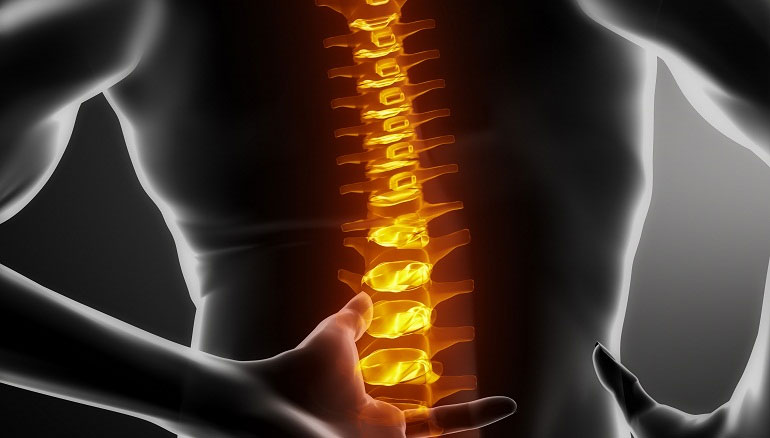
The intervertebral disc a unique structure consisting of the nucleus pulposus encapsulated by the annulus fibrosis and endplates. The disc is the largest avascular organ in the body. Therefore, additional nutrient deprivation associated with injury, smoking, and/or aging is a suspected contributor to disc degeneration. We studied biological agents, peptides, and proteins to reduce cellular stress based on the anatomical characteristics and limited nutrition of the disc-SIRT1, integrin antagonists, and adiponectin. We are testing these treatments in vivo for future clinical trials.
We proposed the disc as an immune-privileged site based on the anatomical feature and also the expression of apoptosis-inducing Fas ligand in the nucleus pulposus. We further clarified the interaction between the nucleus pulposus and macrophages in an animal model of herniated discs. Evidence regarding Fas ligand and macrophage infiltration can provide useful information to understand the pathophysiology of herniated disc disease. We are conducting new studies to develop biological treatments.
Bone and soft tissue tumors, particularly malignant diseases, markedly affect patients' lives. Diagnosis and treatment of bone and soft tissue tumors demand knowledge and expertise due to difficulties in pathological diagnosis, as well as specialized treatments, such as systemic chemotherapy, imaging-based surgical resection, and limb salvage surgery. In these days, the number of cases treated for bone metastasis has increased in our division because overall survival of cancer patients has improved with the development of new therapeutics, such as targeted therapies and immune checkpoint inhibitors. Taking advantage of the multidisciplinary expertise of hospitals, our goal is to improve treatment outcomes in patients with refractory tumors.
Because bone and soft tissue sarcomas involve various tissue types and are uncommon compared with other cancers, establishing treatment strategies in a single facility with a limited number of patients is challenging. Nationwide clinical studies are necessary to establish standard treatments for bone and soft tissue sarcoma.
Recent advances in diagnostic imaging and surgical margin assessment have improved treatment outcomes in patients, as indicated by the increases in survival and functional preservation. However, because a number of cases are still difficult to treat, a breakthrough in research would significantly improve treatment outcomes in patients. We focus on basic research with the ultimate goal of translating our findings into clinical practice. Our current research interests are in the following areas:
Transcutaneous application of carbon dioxide for treatment of bone and soft tissue sarcomas and metastatic bone tumors
Hypoxia in malignant tumors regulates tumor pathogenesis, disease progression, and metastasis. We previously demonstrated that the transcutaneous application of carbon dioxide reduces hypoxic conditions and enhances therapeutic responses using mouse models of malignant fibrous histiocytoma and lung metastasis in osteosarcoma. We are currently investigating the antitumor effects of the transcutaneous application of carbon dioxide and the underlying inhibitory mechanisms of bone destruction in a mouse model of bone metastasis using breast cancer cell lines.
Antitumor effects of survivin inhibition and smac mimetics in bone and soft tissue sarcoma
Suppression of survivin, which belongs to the inhibitor of apoptosis protein (IAP) family, has been implicated in increased cell death and enhanced chemosensitivity. We are currently investigating the role of survivin in bone and soft tissue sarcoma as a potential therapeutic target. In addition, we are investigating the use of a mimetic of smac, an endogenous antagonist of the IAP family, in bone and soft tissue sarcoma and its synergistic effects with existing chemotherapeutics.
Antitumor effects of AICAR in bone and soft tissue sarcoma
Malignant tumors have long been known to rely on glycolysis for energy metabolism instead of mitochondrial oxidative phosphorylation; however, the underlying mechanisms of the metabolic switch remain unclear. We are currently investigating the antitumor effect of AICAR, an AMPK agonist that promotes mitochondrial proliferation, by regulating mitochondrial biogenesis.
The effect of a novel drug delivery system using Low Adhesive Scaffold Collagen (LASCol) as a drug carrier for the treatment of bone metastasis
This research is conducted in collaboration with the Faculty of Biology-Oriented Science and Technology, where the drug carrier was developed. The ultimate goal of this research is to develop an innovative treatment for bone metastasis using a novel drug delivery system.
Our main treatment and research target is osteoarthritis of the knee and hip joints. Therefore, cartilage biology study, such as regenerative medicine and biomechanics study for end-staged osteoarthritis, which needs knee and hip replacement surgery, is mainly focused in our group.
Total knee arthroplasty (TKA) and unicompartmental knee arthroplasty (UKA) are mainly performed for end-stage osteoarthritis (OA). To obtain excellent postoperative outcomes, modified navigation system and an original offset-type tensor has been developed. The modified navigation system enables not only accurate osteotomy, but also 3- D motion analysis. In addition, 3-D preoperative planning software is introduced to improve its accuracy. The offset-type tensor enables the assessment of soft tissue balance throughout range of motion (ROM) in the physiologic knee after TKA, with a reduced patellofemoral (PF) joint and femoral component in place.
The accuracy of measurement and clinical relevance of this tensor have been reported, and this tensor has received high praise in India and all over the world. Together with this tensor and modified navigation system, accurate osteotomy and appropriate soft tissue balance are now available simultaneously. Furthermore evaluating the relationship between 3-D motion analysis, soft-tissue balance and postoperative outcomes is possible. To date, we have reported that intraoperative soft tissue balance is related to postoperative soft tissue balance and clinical outcomes. We have also reported the clinical outcomes with navigation system, patient satisfaction after TKA using the 2011 KSS, and the cause and treatment of prosthetic joint infection.
We have also evaluated the ligament balance in UKA using a tensor developed for UKA and studied the relationship between the ligament balance and postoperative clinical outcomes. In addition, we conducted a large-scale survey of Japanese lower limb alignment and reported changes in lower limb alignment due to age and knee osteoarthritis in the Japanese population. Based on these research results, we are working on further improvement of postoperative outcomes and patient satisfaction.
Total hip arthroplasty (THA) is established treatment option for painful hip
osteoarthritis. Good long-term clinical result is also expected with improvement of
implant design, bearing surface, and materials. However, the difference of
implant design affects the osteo-integration area with the femoral stem, and may
have a disadvantage for bone mineral density around the stem. Thus, we have
evaluated bone mineral density of the femur after THA and investigated the ideal
implant for ideal bearing force to the femur.
For developmental dysplasia of the hip, we are currently using the curved
periacetabular osteotomy (CPO). CPO is a low-invasive osteotomy technique for
hip abductor muscle with a 9-cm incision, but this technique depends on
surgeon's experiences. We are introducing 3-D simulation software and
navigation system when performing CPO to standardize this surgical technique.
(1) Biomechanics
TKA is performed using the navigation system, tensor system, and 3-D preoperative planning software together. The relationships between preoperative condition, intraoperative evaluation with navigation system and offset type tensor, and postoperative outcomes are examined in the postoperative knee, with more physiological movement and higher flexion.
(2) Biology
Total joint replacement is an established surgical treatment option for osteoarthritis, but effective conservative treatment option is not established. Our research purpose is to clear the pathology of osteoarthritis and develop an effective treatment option, including drug and/or gene therapy.
No. 88, Poonamallee High Road,
Chennai 600056
Email id. Info@bjrc.org.in